Guides · Updated November 2026
Dog Food Toppers for Picky Eaters: 12 Easy Ideas
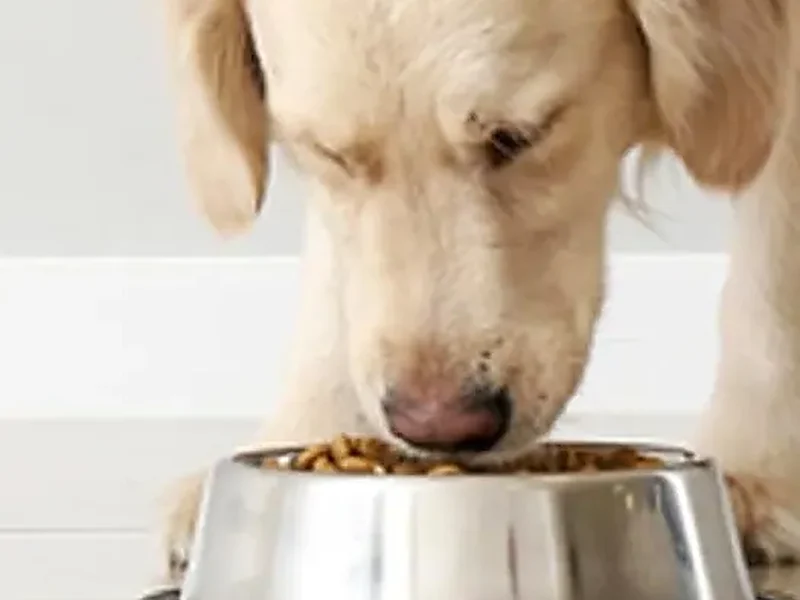
Dog food toppers for picky eaters can turn a sniff-and-walk-away into an empty bowl. A topper is a small, tasty extra on top of your dog’s regular food: a spoonful of plain pumpkin, a little cooked egg, a splash of broth. Veterinarians say toppers work best when they are used sparingly, chosen from dog-safe foods, and kept within 10% of daily calories.[2] Here are 12 easy ideas from your kitchen and the pet store, what to skip, and when picky eating is a reason to call your vet. Every fact has a numbered source at the bottom.
This guide is published by the makers of PROZIMA, which appears as one example in idea 12.
Key takeaways
- Check for a health reason first. Call your vet if a big appetite change lasts more than 12 to 24 hours.[1]
- Follow the 10% rule: toppers and treats together stay under 10% of daily calories.[2][4]
- Keep kitchen toppers plain: no onion, garlic, salt, butter or xylitol.[6][8][23]
- Add the topper before your dog refuses the food, not as a reward for refusing.[3]
- Dogs with health conditions: check with your vet before adding any new food.[1]
Are food toppers good for dogs?
Used sparingly, yes. VCA Animal Hospitals lists toppers as one way to encourage a picky eater: dog-safe foods your dog loves, added to the regular meal, with treats and toppers kept to no more than 10% of the day’s calories.[2] Tufts veterinary nutritionists call this the Pet Nutrition Golden Rule, because it lowers the risk of unbalancing a complete diet.[3]
VCA adds two cautions: picky dogs are often slightly overweight and may simply be full, and lots of variety can teach some dogs to hold out for their favorites.[2] A topper is a small helper, not a new menu every night.
First, rule out a health reason
AKC’s chief veterinarian, Dr. Jerry Klein, says to consult your vet if a significant appetite change lasts longer than 12 to 24 hours. Call right away for puppies under 6 months, dogs with diabetes, dogs whose appetite change comes with vomiting or diarrhea, and dogs that seem to want to eat but don’t, or will only eat soft food.[1] VCA lists dental disease, kidney disease and a swallowed object as examples of medical reasons for a poor appetite.[2]
The 10% rule for toppers
The 10% counts calories, not volume or pieces, and it includes everything your dog eats in a day. Extras fit inside the daily allowance, not on top of it.[4] Tufts gives a handy number: chopped chicken breast is about 50 calories per quarter cup.[3] By our math, a dog that needs 1,000 calories a day has about 100 calories for all extras, roughly half a cup of chicken. Your vet team can tell you your dog’s daily calorie needs.[2]
12 easy dog food toppers for picky eaters
Ideas 1 to 9 come from your kitchen. Serve them plain, chopped small and mixed in, so your dog eats the kibble too.
1. Plain canned pumpkin
Plain canned pumpkin is fiber-rich and contains vitamins A, E and C, potassium and iron. Never use pumpkin pie mix, which may contain xylitol, a sweetener that is toxic to dogs. Start with a small spoonful to avoid adding too much fiber, and make sure your dog drinks enough water.[5]
2. A plain cooked egg
Eggs add protein, fats, vitamins and minerals. Cook them fully and keep them plain: no oil, butter, salt or seasonings. Scrambled or hard-boiled both work. Raw eggs carry a Salmonella risk, and eggs are calorie-dense, so a spoonful is plenty for a topper.[6]
3. Low-sodium broth with no onion or garlic
A splash of broth softens kibble and adds smell. Tufts notes that store-bought broth is usually high in sodium and often contains onion or garlic, so it suggests homemade chicken broth; AKC says broths made for dogs are the simplest option.[3][7]
Onion and garlic are poisonous to dogs in all forms, raw, cooked, dried, powdered and liquid; one teaspoon of garlic powder equals about eight fresh cloves.[8] Concentrated forms like powders and dry onion soup mixes are most often involved.[9] Read the label every time.
4. Plain cooked chicken
Chopped chicken breast is a classic taste enhancer for dogs without protein restrictions, at about 50 calories per quarter cup.[3] Serve it unseasoned and off the bone, because cooked chicken bones splinter easily. Chicken is also a fairly common food allergen in dogs.[10]
5. Low-fat, no-salt cottage cheese
Tufts lists low-fat, no-salt-added cottage cheese as a taste enhancer, at about 50 calories per quarter cup.[3] Use a teaspoon or two, not a scoop: ASPCA notes that pets do not have much of the enzyme that breaks down lactose, so dairy can cause diarrhea or other digestive upset.[23]
6. Plain yogurt with no xylitol
Use plain yogurt with no added sweeteners: xylitol is toxic to dogs. AKC suggests plain Greek-style yogurt, which has less lactose, though many dogs still have trouble digesting lactose.[11]
7. Cooked sweet potato
A little mashed sweet potato is low in fat and provides vitamins A, B6 and C. Serve it cooked, plain and without skin, never raw, which is hard to chew and could cause a blockage. AKC notes vets are cautious with it for diabetic dogs because of its high glycemic index.[12]
8. Green beans or carrots
For dogs who need to watch their weight, vegetables add crunch for very few calories. Green beans can be boiled or steamed, but keep them plain: skip canned green beans with added salt, and never serve them cooked with butter, garlic or garlic salt.[13] Carrots are a low-calorie option, high in fiber and beta-carotene.[14] Chop them small and mix them in.
9. A few blueberries
Blueberries are low in calories and provide fiber and vitamin C. Fresh or frozen both work. Their size can be a choking risk for very small dogs, so cut them in half; AKC says small dogs may only need two or three.[15]
10. Warm water, or a gently warmed meal
This one costs zero calories. Gently warming food can enhance aroma and may help picky eaters, veterinarian Dr. Seth Colman told AKC. Mix dry kibble with warm (not hot) water, or warm refrigerated canned food briefly: 10 seconds at a time in the microwave, stirred well, served at room to body temperature (about 95–100°F), never hot.[16]
11. Store-bought toppers: wet food, gravies, freeze-dried and powders
The easiest store-bought topper is a spoonful of canned dog food. VCA suggests a canned food your dog likes as a “top dressing” on kibble, and gravy may add interest.[2] Tufts suggests trying textures (stew, pâté, shredded, chunks) and noting what your dog prefers.[3]
Pouches, gravies, freeze-dried bits and powders sold as toppers vary, so read the nutritional adequacy statement. “Complete and balanced” means all required nutrients in the right ratios; “intended for intermittent or supplemental feeding only” means the product is an extra.[17] If a topper is raw, FDA found raw pet food more likely to carry disease-causing bacteria such as Salmonella and Listeria, so wash your hands after serving.[18]
12. A drizzle of oil
A small amount of oil adds flavor and fat. Fat is calorie-dense, so count it in the 10%.[4] VCA notes that pancreatitis may be triggered in some cases by a fatty meal, so if your dog has had pancreatitis or eats a low-fat diet, ask your vet first.[22]
Fats differ. Tufts explains that linoleic acid, an omega-6, is essential for all animals, and that plants make the omega-3 alpha-linolenic acid (ALA).[20] Hemp seed oil has a mild, nutty flavor and contains both linoleic acid (omega-6) and ALA (omega-3), in about a 3:1 ratio.[19] FDA notes that hemp seeds do not naturally contain THC.[21] Read more in our guide Can dogs eat hemp seeds?
One example is PROZIMA, made by the publishers of this site: cold-pressed hemp seed oil with omega-3, 6 and 9 and no THC, given once a day in the food, in Original, Chicken and Beef flavors. More on the PROZIMA website, or see our side-by-side of 8 hemp oils on Amazon.
PROZIMA: how much to add, once a day
| Dogs over 50 lbs | 1 full dropper |
| Dogs 21–49 lbs | ½ dropper |
| Dogs under 20 lbs | ¼ dropper |
Mix it into the food once a day. Count it with your other toppers, and ask your vet first if your dog has a health condition or takes medication.
Save up to 24% with Subscribe & Save (Original). Original, Chicken and Beef.
Toppers to skip
- Onion, garlic, chives and leeks in any form, including powders and seasoned broth.[8][23]
- Grapes and raisins, which can lead to kidney damage in dogs.[23]
- Anything with xylitol, such as pumpkin pie mix or sweetened yogurt. Xylitol can cause low blood sugar and liver damage.[23][5]
- Chocolate, coffee, caffeine and macadamia nuts.[23]
- Salty foods and seasoned leftovers, like green beans cooked with butter or garlic salt.[23][13]
- Cooked bones, which can splinter.[10]
How to use toppers without making things worse
- Keep a routine. Feed at set times, leave the food down for 15 to 20 minutes, then take it away until the next meal.[1]
- Add the topper first, before your dog has a chance to refuse.[3]
- Stick with what works once you find a texture or flavor your dog likes.[2]
- Change slowly, over a few days, to avoid stomach upset.[1]
- Walk before breakfast. Dogs are usually hungrier after exercise.[2]
FAQ: dog food toppers
What are good dog food toppers for picky eaters?
Plain, dog-safe foods in small amounts: plain canned pumpkin (not pie mix), cooked plain egg, low-sodium broth with no onion or garlic, plain cooked chicken, plain yogurt with no xylitol, cooked sweet potato, green beans or a few blueberries. A spoonful of canned dog food or warm water over kibble also works.[3][5][6][16]
What can I add to my dog’s food as a topper?
Anything plain and dog-safe that fits within 10% of daily calories. Skip onion, garlic, grapes, raisins, xylitol, chocolate, macadamia nuts and salty foods.[2][23]
Are food toppers good for dogs?
Used sparingly, yes. VCA lists toppers as one way to encourage a picky eater, as long as the foods are safe and toppers plus treats stay under 10% of calories.[2]
How much topper should I add to my dog’s food?
Toppers and treats together should stay at or under 10% of daily calories. It counts calories, not spoonfuls, so trim the kibble a little to make room.[4]
Can I put broth on my dog’s food?
Yes, if it is low in sodium and has no onion or garlic. Read the label or use a broth made for dogs.[3][7]
When should I call the vet about a picky eater?
If a significant appetite change lasts longer than 12 to 24 hours. Call right away for puppies under 6 months, dogs with diabetes, or dogs that also vomit or have diarrhea.[1]
This guide is general information, not veterinary advice. Check with your vet before adding any new food or topper, especially if your dog is a puppy, is pregnant or nursing, has a health condition, or takes medication.
Sources
All sources opened and checked November 3, 2026.
- American Kennel Club: Why Is My Dog a Picky Eater? (Dr. Jerry Klein, AKC Chief Veterinarian)
- VCA Animal Hospitals: My Dog Won’t Eat: Feeding Picky Eaters
- Tufts University Cummings School of Veterinary Medicine, Petfoodology: How Do I Get My Picky Pet to Eat? (Deborah E. Linder, DVM)
- American Kennel Club: How Many Treats Can a Dog Have Per Day?
- American Kennel Club: Can Pumpkin Help With Dog Diarrhea? (what kind of pumpkin to feed)
- American Kennel Club: Can Dogs Eat Eggs?
- American Kennel Club: Bone Broth for Dogs
- VCA Animal Hospitals: Onion, Garlic, Chive, and Leek Toxicity in Dogs
- Merck Veterinary Manual: Garlic and Onion (Allium spp) Toxicosis in Animals
- American Kennel Club: Can Dogs Eat Chicken?
- American Kennel Club: Can Dogs Eat Yogurt?
- American Kennel Club: Can Dogs Eat Sweet Potatoes?
- American Kennel Club: Can Dogs Have Green Beans?
- American Kennel Club: Fruits and Vegetables Dogs Can and Can’t Eat
- American Kennel Club: Can Dogs Eat Blueberries? (updated October 20, 2026)
- American Kennel Club: Should You Warm Up Your Dog’s Food? (Dr. Seth Colman)
- AAFCO (Association of American Feed Control Officials): Reading Labels
- FDA: Get the Facts! Raw Pet Food Diets Can Be Dangerous to You and Your Pet
- Apetroaei et al. (2024), Hemp Seeds (Cannabis sativa L.) as a Valuable Source of Natural Ingredients for Functional Foods: A Review, Molecules, via NIH PubMed Central
- Tufts University Cummings School of Veterinary Medicine, Petfoodology: The Skinny on Fat, Part 2: Essential fatty acids and inflammation
- FDA: FDA Responds to Three GRAS Notices for Hemp Seed-Derived Ingredients for Use in Human Food (December 20, 2018)
- VCA Animal Hospitals: Pancreatitis in Dogs
- ASPCA Animal Poison Control: People Foods to Avoid Feeding Your Pets